




Post-harvest cultivation
Modern tillage differs from traditional methods and emphasizes sustainable soil management, moisture conservation, and erosion protection. Utilizing modern machinery in tillage enhances the efficient management of crop residues, delivering environmental and economic benefits to farmers. However, the choice of specific practices depends on soil type, climate, and farm objectives.


Stubble cultivation – 3 most frequently asked questions
Stubble cultivation is the first operation carried out after harvesting crops. In this FAQ, we've gathered the most common questions about choosing a machine, timing the operation, working with residues, and making quick setting adjustments. Click on a category to go to the topics that interest you.
Stubble cultivation – 3 most frequently asked questions
In this section, we explain why stubble cultivation is performed, when is the best time to start work after the harvest, and how to choose a machine to suit the field conditions.
Stubble cultivation is the first stage of clearing the field after the harvest and an important part of planning further cultivation. Its main tasks are to shallowly mix post-harvest plant residues with the soil, reduce moisture loss, stimulate volunteers and weeds to sprout, and prepare the seedbed for subsequent operations.
Stubble cultivation is best carried out as soon as possible after the harvest, before the soil dries out excessively. A quick, shallow operation helps to reduce moisture loss, mix post-harvest residues with the topsoil, and stimulate volunteers and weeds to sprout. However, the timing should be adjusted to the conditions: if the soil is too wet, it is better to wait to avoid damaging its structure.
A farming machine for stubble cultivation is selected based on the amount of residue, soil type, planned working depth, and the desired effect after a pass. For very shallow work and stimulating volunteers, a SpringExpert mulch harrow or a ComboTill ultra-shallow cultivation machine is a good choice. For cutting and mixing residues, the SpeedCutter disc harrow is suitable, and for deeper stubble undercutting and soil loosening, Rolmako's Multifunctional tillage cultivator U436. With a large amount of residue, it is also worth paying attention to the machine's clearance, material flow, and the chosen roller.
Choosing a machine for stubble cultivation
The choice of agricultural machine for stubble cultivation depends on what is left in the field after the harvest and the desired effect of the first pass. In this section, we explain when a mulch harrow, disc harrow, stubble cultivator, a cultivator and mulch harrow combination, or a chisel plough is appropriate, and how to choose a roller to suit the working conditions.
The machine is selected based on both the quantity and type of post-harvest residues. With a small amount of straw or well-shredded mulch residues, a shallower, less aggressive operation with a mulch harrow or a disc harrow is usually sufficient. With a large volume of plant matter, long straw, or rapeseed or maize residues, greater clearance, good material flow, effective cutting and mixing, and a clog-resistant roller are more important.
A mulch harrow (e.g., the SpringExpert) is a good choice when, after the harvest, you want very shallow work, even distribution of post-harvest residues, and rapid stimulation of volunteers and weeds to sprout. A disc harrow for ultra shallow cultivation, such as the SpeedCutter from Rolmako, can perform a similar function. These are good solutions for reducing moisture loss, working on stubble, and preparing the field for the next main operation. However, they are not tools for deep loosening or intensively mixing a large mass of plant residues with the soil.
A disc harrow is effective when, after the harvest, you need to not only shallowly disturb the stubble but also cut and mix post-harvest residues with the soil. It can be used for cultivation after cereals, rapeseed, maize, and catch crops, especially when a larger amount of plant matter remains in the field. It is a good choice if the goal is faster residue decomposition, surface levelling, and preparing the field for the next operation.
Rolmako's multifunctional tillage cultivator U436 is a good choice when, after the harvest, a more robust operation with tines is needed: undercutting the stubble, deeper soil loosening, and more intensive mixing of residues. It is effective where very shallow cultivation, a mulch harrow, or working with discs alone does not produce the desired effect, for example, with greater soil compaction, the need for fuller undercutting, or a larger amount of residue.
A set like Rolmako's ComboTill is worth choosing when you need to combine two effects: more intensive work with tines and the surface distribution of residues.
- The cultivator undercuts the stubble, loosens the soil, and mixes residues in a deeper layer.
- The mulch harrow distributes material across the surface and helps to even out the finish after the pass.
It's a good solution when dealing with a large amount of residue, unevenly spread straw, or where a single pass needs to do more than just shallowly cultivate the stubble.
Yes, the Rolmako U624 Chisel plough can be used for post harvest cultivation, but not as a typical first pass. It works well when the goal is not only to mix residues but also to deeply loosen the soil profile without inverting the furrow. Compared to the SpringExpert mulch harrow, the SpeedCutter disc harrow, or the Rolmako U436 multifunctional tillage cultivator, it works deeper and is more power-demanding. Therefore, it's best chosen in situations requiring more significant soil intervention, rather than just shallow cultivation of the stubble after harvest.
The choice of roller depends on the machine type, working depth, soil moisture, and the amount of post-harvest residue.
- In shallow cultivation, good ground contour following and even consolidation are important.
- In heavier conditions, important factors include clod crushing, self-cleaning, and a free flow of material.
A poorly chosen roller can worsen the working effect: it can clog, leave an uneven surface, or over-compact the soil.
Objective, working depth, and post-harvest conditions
The first pass after harvest should be tailored to the working objective, depth, amount of residue, and soil moisture. Below, we explain how to select the parameters for post-harvest cultivation in various conditions and how to evaluate the effect after a pass.
The first pass after harvest is usually done shallowly to limit soil drying and stimulate volunteers to emerge. Deeper cultivation makes sense when there is a lot of residue in the field, the soil is compacted, or the seedbed needs more intensive preparation for the next pass. The most important thing is that the depth should be determined by the cultivation goal and field conditions, not by habit.
Yes, properly executed post-harvest cultivation can reduce water loss from the soil. A shallow pass after the harvest interrupts evaporation from the field's surface and lightly covers post-harvest residues without excessively drying out deeper layers. However, working too deeply in dry conditions can have the opposite effect.
Yes, especially when it is done shallowly and quickly after the harvest. Disturbing the top layer of soil creates better conditions for the germination of seeds on or just below the surface. This allows them to be destroyed in a subsequent pass before they become a problem for the next crop.
After harvesting cereals, the most important thing is to quickly work the stubble and assess how much straw is left in the field. With a large amount of chopped straw, you need to ensure it is evenly distributed and shallowly mixed in, so it doesn't form swathes that make subsequent operations more difficult. If the straw has been removed, the first pass can be shallower and less intensive – its main purpose will be to limit soil drying and to stimulate volunteers and weeds to grow.
After rapeseed and maize, stubble cultivation must be adapted to the large amount of crop residue. After rapeseed, it is important to shallowly stimulate volunteers and mix the stems with the topsoil. After maize, it is more important to properly shred and evenly distribute the tough residues to prevent the machine from clogging during subsequent passes. In both cases, it is worth choosing a machine with good material flow and a configuration capable of handling a large volume of post-harvest residue.
After the first stubble cultivation, the residues should be evenly distributed and lightly mixed with the top layer of soil, and the field surface should be level, without deep ruts or large swathes of straw. The operation should encourage volunteers and weeds to germinate, but without excessively drying out the soil. If, after a pass, you notice large uncovered residues, uneven swathes, or soil that has been inverted too deeply, you should adjust the working depth, speed, or your choice of machine.
First aid: problems and adjustments during stubble cultivation
In this section, we've gathered the most common problems encountered during stubble cultivation and the initial adjustments to consider: depth, speed, residue flow, roller selection, and matching the machine to the tractor.
A machine most often clogs when there is a large amount of long, unevenly distributed residue in the field, and the clearance or spacing of the working elements is insufficient for free material flow. The cause may also be excessively wet post-harvest material, too great a working depth, or an incorrect speed. Check:
- the shredding of the material,
- the working depth,
- the operating speed,
- the point where the residue begins to block (between the working elements, in front of the roller, or under the machine frame).
If the problem persists, consider using a machine with greater clearance and better material flow.
If the material is mostly left on the surface, it's worth checking whether:
- the residues are properly mulched,
- the straw or stalks are not left in swathes behind the combine harvester,
- the machine is operating at the correct depth,
- the working speed ensures good mixing,
- the discs, tines, or blades are not worn,
- the roller does not obstruct the flow of material.
If the result is still poor after making adjustments, the problem may be that the machine is not suitable for the amount of residue or the working configuration is too gentle.
When post-harvest cultivation dries out the soil, you usually need to reduce the working depth and intensity. A pass that is too deep in dry conditions opens up the soil profile and increases moisture loss. You should consider:
- working shallower,
- less aggressive settings,
- a machine for ultra shallow cultivation.
If there is significant unevenness before cultivation, post-harvest cultivation alone may not remove it. In that case, you should adjust the settings, choose a different roller, or plan another levelling pass. Also, check whether:
- the machine is working evenly across its entire width,
- the working depth is not too shallow or unstable,
- the working speed does not cause the machine to bounce,
- the post-harvest residue is not lying in swathes,
- the roller is following the ground contour well and finishing the machine's work.
If the tractor is losing speed, has high wheel slip, or is constantly working at its limit, you should check whether:
- the machine is not working too deep,
- the working speed is appropriate for the conditions,
- the working elements are not set too aggressively,
- the post-harvest residue does not block the flow of material,
- the soil is not too wet, compacted, or heavy,
- the working width and weight of the machine match the tractor's power.
The problem is related to the settings if it can be mitigated by changing the depth, speed, pressure, working angle, or agri roller configuration. If, despite these adjustments, the machine continues to clog, mixes residue poorly, leaves an uneven field, or overloads the tractor, the cause may be that the machine is not suited to the conditions. In such a situation, it is worth consulting with agricultural machine producer Rolmako advisors about equipment configuration and selection, regardless of which manufacturer's equipment you use to cultivate your land. Soil specifics or current weather conditions can be unpredictable, so together we can adjust the machine's settings to better meet the current challenges in the field and fully utilise its potential.
Didn't find the answer?
Get in touch – Rolmako advisors will help you choose and configure the right machine for stubble cultivation for your field conditions.

Uncertain about which tillage roller to select? This publication is for you
When configuring a tillage device, the primary consideration is selecting the appropriate tillage roller, based on the soil it will operate on and the desired outcome. Depending on its construction, the roller can compact soil at varying depths. The tool can either cultivate the entire soil surface, perform strip work, or additionally cut plant residues. To choose the most suitable roller, please refer to our publication.
Diverse soil
and working conditions require individual adjustments
Each tillage machine is engineered for specific soil conditions, underscoring the importance of proper device configuration and selection of suitable working elements. When constructing agricultural machinery, we understand that a farmer managing diverse soil types requires a versatile machine effective in heavy clay, sandy, or stony soil. This presentation aims to assist our dealers and farmers in selecting the right agricultural machines by identifying suitable working tools, chisels, shares, and discs for specific crops and desired outcomes.
Design office
Our design facilities enable us to proactively implement changes and improvements to products, eliminating potential issues at the design stage before producing the first prototype.
Product research
and development
The most important aspect for us is the field test and the positive feedback from farmers regarding the performance of our new products. Before the machine receives the company's characteristic blue color, it undergoes extensive development before reaching the customer.
Polish export product with a foreign
sales ratio exceeding 80%
The high share of exports is not accidental.
Rolmako machines have been successfully
competing with international agricultural equipment
for many years. Polish Rolmako agricultural machines
predominantly operate in fields within countries that have
stringent requirements for agricultural equipment. Our
products have demonstrated their effectiveness across
various soil systems. Numerous companies
in the agricultural sector have already recognized
Rolmako as a reliable partner for modern agriculture.
Flexible configuration of tillage machines tailored to soil requirements
An individualized approach to each client, along with global collaboration and experience exchange, has enabled us to develop numerous configurations and additional equipment for agricultural machines to suit specific field conditions. The extensive range of available options for cultivation machines ensures that you can select the optimal solution that meets your expectations regarding work efficiency, quality of working elements, and financial considerations.
Technology giving an advantage
over the competition
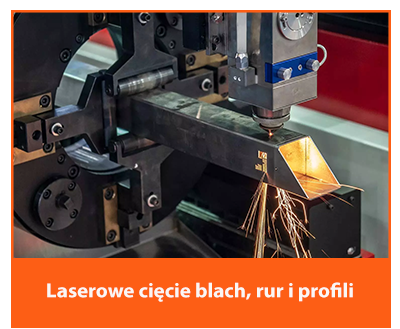
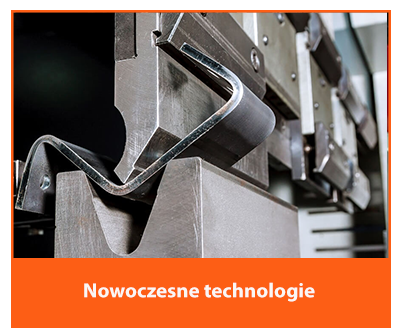
Production at the Rolmako factory is based on human labor, which is supported by modern automatic devices. The company employs the latest numerically controlled machines, including lasers for sheet metal processing, a center for profile and pipe processing, plasma and gas cutters, press brakes, universal shears and guillotines for cutting, hydraulic and mechanical presses, lathes, milling machines, shapers, hardening furnaces, pneumatic and rotary shot blasting machines, and robotic welding. The company is equipped with a warehouse with a large stock of metallurgical products, an automatic sheet storage system, and machine components. The technology used by the company, backed by expert human labor, allows achieving production results that will satisfy the most demanding customer.
Tillage machines are highly durable due to the use of specialized steels
The choice of tillage machinery by farmers largely depends on field characteristics and crop variety. The type and quality of steel used in pre-sowing aggregates, disc harrows, stubble cultivators, and other tillage machinery significantly impact machine reliability, maintenance costs, overall productivity, and operational longevity. Operating tillage machinery in hard soil imposes heavy loads on agricultural equipment. The high strength of the Swedish fine-grained steel used by Rolmako enhances efficiency by enabling higher working speeds without unscheduled service and repairs. This use of special steels extends the interval between inspections and allows for optimal utilization of the machinery's cultivation capabilities.
Why Choose Rolmako?
Superior machine quality at an optimal price ratio and beyond
Our expertise, experience, and commitment to continuous development have enabled us to achieve the most favorable quality-price ratio of agricultural machinery. This excellent ratio allows us to consistently and dynamically increase sales, making our products highly attractive in the agricultural market. Purchasing a Rolmako machine is an investment that pays off, ensuring maximum efficiency and low operating costs, thereby guaranteeing a quick return on investment. We trust in the quality of our machines, which will not only meet but exceed expectations in the most demanding conditions.
Machines friendly to both soil and farmer; cultivation should benefit, not harm, the soil
Who understands a machine better than the farmer who operates it daily?
Our agricultural machines are esteemed by farmers globally.
Here are some facts:
- oversized structures
- high-grade fine-grained construction steels
- reduced weed infestation thanks to ultra-shallow cultivation
- using fewer chemical agents
- water retention in the soil
- high-quality working elements
- easy-to-use agricultural tools
- low operating costs
- low energy demand
- good after-sales service
Sustainable agriculture
according to Rolmako
Our objective is to produce versatile agricultural machinery that delivers optimal results in sustainable farming systems. The comprehensive range of implements and a broad selection of working elements in a single machine enable us to achieve this. By performing multiple operations in one pass, our machines promote sustainable agriculture by minimizing fuel consumption, reducing greenhouse gas emissions, and limiting soil erosion, thereby contributing to more efficient use of natural resources.
Advantages of selecting Rolmako:
- comprehensive selection of available tillage tools
- working elements and other wear components exclusively from market leaders
- swedish quality fine-grained steel S500 and S700
- enhanced crop productivity through cutting-edge technologies
- optimal time efficiency
- increased profitability from soil cultivation
- competitive spare parts pricing
- low acquisition costs relative to the benefits achieved
In harmony with nature
In our work, we place particular emphasis on symbiosis with nature. We understand that respect for nature and adherence to the principles of resource protection are essential for the sustainable development of agriculture. Therefore, in designing and building our agricultural machinery, we aim to minimize the negative impact on the environment. We invest in production technologies that limit the emission of harmful substances into the atmosphere and utilize renewable energy sources. Our cultivation machinery is designed to reduce the number of passes in the field, thereby decreasing soil compaction and minimizing wind and air erosion. Consequently, we not only mitigate the negative impact on the soil but also enable farmers to produce agri-food more efficiently with less time and cost.
Seeder for cover crop
and fertilizer
We equip our cultivation machines with catch crop seeders in cooperation with specialists from APV, who offer a wide range of catch crop and fertilizer seeders. The entire range of products and available accessories can be found on the manufacturer's website (https://en.apv.at). By utilizing APV catch crop seeders on Rolmako cultivation machines, unnecessary travel is reduced. APV devices ensure the precise spreading of catch crops and subsowing, even in the smallest doses.
Liquid manure applicator
The selection of the Vogelsang slurry applicator model depends on the width of the tillage machine on which it will be installed. Among the extensive range of Rolmako machines, some are compatible with Vogelsang applicators that enable fertilization and cultivation in a single pass over the field.
Stay current by following us on social media
We invite you to connect with our official social media profiles. By engaging with our pages, you will stay informed about our current activities. Follow our social media profiles to receive updates on new products, events, and promotions. We consistently share valuable information about our products on social media, providing access to company publications. Our channels serve as the premier source of theoretical and practical knowledge for those interested in the agricultural machinery industry. We encourage you to follow and comment on our posts.
Rolmako catalog
The Agricultural Machinery Catalog is a comprehensive publication detailing the range of Rolmako agricultural tools. It serves as a rich source of information for distributors of Rolmako machines and end customers seeking detailed insights into the technical parameters, purposes, and configuration options of the equipment. It provides essential information for understanding the criteria for selecting the appropriate machinery, suitable for various soil and climatic conditions. The catalog includes several thousand photos of Rolmako machines in various equipment variants.