




Ultra-Shallow Soil Cultivation
The shallower the soil is cultivated, the less humus degradation occurs, but nutrient mobilization increases. Farmers currently seek machines capable of shallow soil cultivation while cutting the soil across the entire working width and minimally mixing it with crop residues. Ultra-shallow stubble cultivation effectively destroys self-seeding and weeds by mechanically cutting their roots, which then dry out under the sun's influence. Additionally, ultra-shallow cultivation significantly reduces fuel consumption.


Ultra shallow cultivation – 3 frequently asked questions
Ultra shallow cultivation is a very shallow tillage operation usually performed after harvesting. In this FAQ, we have gathered the most common questions about working depth, machine selection, working in crop residue, and making quick adjustments during ultra shallow stubble cultivation. Click on a category to go to the topics that interest you.
Ultra shallow cultivation – 3 frequently asked questions
In this section, you will find basic information about ultra shallow cultivation, which farmers ask about first: what it is, when to do it, and what to use.
Ultra shallow cultivation involves very shallow disturbance of the topsoil, usually to a depth of a few centimetres (2–5 cm). Its purpose is not deep loosening, but rather to quickly cut or move the stubble, reduce moisture loss, and stimulate the emergence of volunteers and weeds. It is a tillage operation most often used after harvest, when work on the field needs to begin without intensively mixing deeper soil layers.
Ultra shallow cultivation makes sense when you want to act quickly after the harvest but do not want to dry out the soil with deeper tillage. It is a particularly good solution in conditions where moisture conservation and limiting the intensive mixing of the soil profile are important. It works best when the residue is well-shredded and evenly distributed, and the soil is not too wet.
For ultra shallow stubble cultivation, it is best to choose a machine that works at a very shallow depth while evenly undercutting or disturbing the top layer of soil. In the Rolmako range, one such solution is the SpeedCutter disc harrow, which is specifically designed for ultra shallow post-harvest work. For distributing residue and stimulating volunteers, the SpringExpert mulch harrow will also prove effective, and for cutting a larger mass of plant material, the ProCut or TurboCut knife rollers can be considered.
Choosing a machine for ultra shallow cultivation
When choosing a machine for ultra shallow cultivation, you should consider the working depth range of the implement, as well as the farm's conditions, the amount of residue, and the potential need for other treatments. In the section below, you will find a comparison of agricultural machines from the Rolmako range that can be used in ultra shallow cultivation technology.
The SpeedCutter is a great choice when ultra shallow work with discs is required: undercutting or disturbing the topsoil, cutting residue, and quickly stimulating volunteers. This harrow from Rolmako is a good option for the first shallow pass after the harvest, especially where conserving soil moisture is a priority.
The ProCut and TurboCut knife rollers are part of ultra shallow cultivation technology, although their main task is to cut and shred plant mass on the field's surface. They can work independently on catch crops or residue, but they often support a subsequent operation, such as work with the SpeedCutter, a disc harrow, or a cultivator. Choose them when a large amount of residue needs to be cut and evenly distributed before shallow soil disturbance.
The MATRIX uses star wheels that very shallowly agitate the top layer of soil, pulling out small weeds and breaking up soil crust. In ultra shallow cultivation, it helps create conditions for the emergence of volunteers and weeds and improves straw decomposition, while not functioning as a deep-loosening machine. It is a solution for fast, surface-level work after harvest.
The SpringExpert from the Rolmako range (unlike the SpeedCutter) does not rely on discs for its work, so it is better suited for situations where you want to distribute material and stimulate emergence rather than aggressively cut and mix residue with the soil.
Yes, the ComboTill can be used for ultra shallow cultivation, especially after harvest. It works well when, in addition to shallow stubble breaking, it is also necessary to distribute residues and stimulate volunteers. It is not just a machine for surface cutting, like a knife roller, but a unit that combines the work of a cultivator and a mulching harrow in a single pass.
The more long, unevenly distributed mass in the field, the more important it is to shred the residues, ensure material flow through the machine, and reduce the risk of clogging. In practice, you can follow these simple rules:
- little residue, fine straw, even distribution – SpringExpert, MATRIX or SpeedCutter,
- stubble requiring very shallow breaking and stimulation of volunteers – SpeedCutter,
- a lot of stems, catch crops, rapeseed or maize – ProCut or TurboCut for cutting and shredding plant mass,
- a lot of residue and a need to combine the action of tines with material distribution – ComboTill.
A machine for ultra shallow cultivation is selected based on the tractor's power, acreage, and expected efficiency. Agricultural machinery manufacturer Rolmako's offer includes farming machines with a width of around 3–4 m, such as the ProCut or smaller SpeedCutter configurations, as well as wider solutions for larger farms, e.g., the PowerDisc up to 12 m, the ComboTill up to 6 m, or the SpringExpert in 6.0, 7.5, and 9.0 m versions. A wider working width speeds up the operation but requires a power reserve, stable guidance, and good transport conditions.
Working depth and speed, and the effect after a pass
Ultra shallow cultivation requires precise machine setup, as the effect is determined by centimetres (or even millimetres), working speed, and even contact of the working elements with the soil. In this section, we explain how to select the depth and speed of the pass, when a second operation is needed, and how to recognise that the stubble has been properly broken without excessive soil mixing.
A machine for ultra shallow cultivation is usually set to a few centimetres, most often around 2–5 cm. If the machine works deeper, the operation is no longer considered ultra shallow cultivation.
In ultra shallow cultivation, a fairly high but stable working speed is important – so that the machine maintains a consistent shallow depth, does not bounce, and leaves an even effect across the entire working width. For Rolmako machines, the following is assumed:
- for the SpeedCutter disc harrow, working at a depth of 2–5 cm at a speed of up to 20 km/h,
- for the SpringExpert, a range of 10–25 km/h, with a recommended speed above 15 km/h.
Yes, but only if the machine is designed for it and set up correctly. Ultra shallow cultivation is about evenly undercutting or disturbing the entire cultivated surface at a very shallow depth. The SpeedCutter disc harrow is a disc harrow designed to work at a depth of 2-3 cm for a perfect cut.
Yes, provided that the operation is genuinely shallow. Ultra shallow cultivation interrupts evaporation from the field surface and does not dry out the deeper soil layers. If the machine works too deep, the effect can be the opposite.
Yes, that is one of the main goals of ultra shallow cultivation. Shallow disturbance of the topsoil creates better conditions for the germination of volunteers and weeds, which can then be destroyed with a subsequent pass. It is important not to work too deeply, as the seeds may be covered by too thick a layer of soil and emergence will be less even.
That depends on the purpose of the operation. One pass may be sufficient for quick stubble disturbance, reducing moisture loss, and evenly distributing residues. If the goal is to stimulate volunteers and weeds, a second pass is usually needed after they emerge to destroy them mechanically before the next stage of cultivation.
After ultra shallow cultivation, the stubble should be evenly disturbed or undercut at a shallow depth, crop residues should be spread without large strips or blockages, volunteers should be stimulated to grow, and the surface prepared for the next operation. Furthermore, the soil should not be deeply mixed or excessively dried out.
First aid: problems and setting adjustments in ultra shallow cultivation
With ultra shallow cultivation, even a small adjustment to the depth, speed, or machine settings can change the effect of a pass. Below, you will find the most common problems and the actions to start with for diagnostics in the field.
With ultra shallow cultivation, you must pay special attention to ensure the machine follows the ground contours evenly and works across its entire width. Uncut strips usually result from:
- insufficient working depth,
- uneven ground,
- excessive speed,
- worn working elements.
If the problem persists after adjusting the depth and speed, it is worth checking the condition of the discs, knives, or tines and ensuring the machine is suitable for the conditions.
It is worth checking whether:
- the residues are well chopped and evenly distributed,
- the machine is not working too deep or too fast,
- material is not getting blocked in front of the working elements or the roller,
- the discs, knives, or tines are not worn out.
If clogging persists despite adjustments, the problem may be that the machine is not suitable for the amount and type of crop residue. Rolmako machines can often be expanded with new cultivation sections, for example, a front knife roller to assist cultivation ahead of the main working section of the tillage machine. Rolmako has a whole range of machines mounted on the front three-point linkage, which can be treated as an additional tool before the main cultivator operates.
Make sure that:
- the machine worked evenly across its entire width,
- the treatment was not performed too deep,
- crop residue is not lying in strips,
- the soil had sufficient moisture for germination,
- the volunteer seeds were not mixed in too deep.
If the goal is to stimulate volunteers, ultra shallow cultivation should only slightly disturb the top layer of soil and create even conditions for germination.
First, you need to correct the depth setting and check if the working elements are following the ground contours evenly. With ultra shallow cultivation, even a few extra centimetres changes the effect of the treatment: the soil is mixed more intensely, loses moisture faster, and volunteers can be covered too deeply.
With ultra shallow cultivation, even slight deviations affect the treatment's outcome. The machine may bounce or fail to maintain a shallow depth even with minor field unevenness or incorrect settings. It is worth checking whether:
- the operating speed is not too high,
- the machine has even contact with the ground,
- the working depth is set uniformly across the entire width,
- the field does not have ruts, large clods, or transverse unevenness,
- the working elements are not worn out,
- the hitch and roller settings do not interfere with the machine's tracking.
First of all, check whether:
- the residue was evenly spread by the combine harvester,
- the straw or stems are not too long,
- the machine is working at the correct depth,
- the speed is not causing material to be thrown into strips,
- the roller or rear components are not gathering residue in one place,
- a ProCut, TurboCut, or SpringExpert would not be a better choice for these conditions.
If residue is regularly left in strips, the problem may stem not only from the machine's settings but also from the prior shredding and distribution of material after the harvest.
The problem usually stems from the settings if it can be mitigated by adjusting the depth, speed, down pressure, ground contouring, or agricultural roller settings. A mismatched machine is more likely when, despite such adjustments, the equipment still doesn't undercut the entire surface, clogs with residue, works too deep, or fails to produce an even effect after a pass. If the problem persists, it is worth consulting with farm machinery manufacturer Rolmako advisors about equipment selection; it might just be the best time to choose a machine from our company.
Didn't find the answer?
Get in touch – Rolmako advisors will help you choose and configure the right ultra-shallow cultivation machine for your field conditions.

Uncertain about which tillage roller to select? This publication is for you
When configuring a tillage device, the primary consideration is selecting the appropriate tillage roller, based on the soil it will operate on and the desired outcome. Depending on its construction, the roller can compact soil at varying depths. The tool can either cultivate the entire soil surface, perform strip work, or additionally cut plant residues. To choose the most suitable roller, please refer to our publication.
Diverse soil
and working conditions require individual adjustments
Each tillage machine is engineered for specific soil conditions, underscoring the importance of proper device configuration and selection of suitable working elements. When constructing agricultural machinery, we understand that a farmer managing diverse soil types requires a versatile machine effective in heavy clay, sandy, or stony soil. This presentation aims to assist our dealers and farmers in selecting the right agricultural machines by identifying suitable working tools, chisels, shares, and discs for specific crops and desired outcomes.
Design office
Our design facilities enable us to proactively implement changes and improvements to products, eliminating potential issues at the design stage before producing the first prototype.
Product research
and development
The most important aspect for us is the field test and the positive feedback from farmers regarding the performance of our new products. Before the machine receives the company's characteristic blue color, it undergoes extensive development before reaching the customer.
Polish export product with a foreign
sales ratio exceeding 80%
The high share of exports is not accidental.
Rolmako machines have been successfully
competing with international agricultural equipment
for many years. Polish Rolmako agricultural machines
predominantly operate in fields within countries that have
stringent requirements for agricultural equipment. Our
products have demonstrated their effectiveness across
various soil systems. Numerous companies
in the agricultural sector have already recognized
Rolmako as a reliable partner for modern agriculture.
Flexible configuration of tillage machines tailored to soil requirements
An individualized approach to each client, along with global collaboration and experience exchange, has enabled us to develop numerous configurations and additional equipment for agricultural machines to suit specific field conditions. The extensive range of available options for cultivation machines ensures that you can select the optimal solution that meets your expectations regarding work efficiency, quality of working elements, and financial considerations.
Technology giving an advantage
over the competition
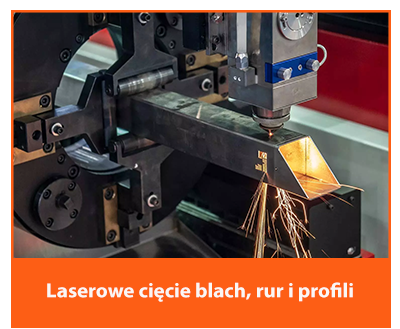
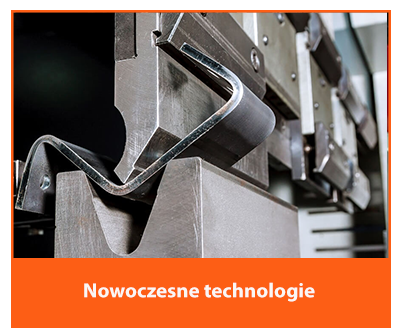
Production at the Rolmako factory is based on human labor, which is supported by modern automatic devices. The company employs the latest numerically controlled machines, including lasers for sheet metal processing, a center for profile and pipe processing, plasma and gas cutters, press brakes, universal shears and guillotines for cutting, hydraulic and mechanical presses, lathes, milling machines, shapers, hardening furnaces, pneumatic and rotary shot blasting machines, and robotic welding. The company is equipped with a warehouse with a large stock of metallurgical products, an automatic sheet storage system, and machine components. The technology used by the company, backed by expert human labor, allows achieving production results that will satisfy the most demanding customer.
Tillage machines are highly durable due to the use of specialized steels
The choice of tillage machinery by farmers largely depends on field characteristics and crop variety. The type and quality of steel used in pre-sowing aggregates, disc harrows, stubble cultivators, and other tillage machinery significantly impact machine reliability, maintenance costs, overall productivity, and operational longevity. Operating tillage machinery in hard soil imposes heavy loads on agricultural equipment. The high strength of the Swedish fine-grained steel used by Rolmako enhances efficiency by enabling higher working speeds without unscheduled service and repairs. This use of special steels extends the interval between inspections and allows for optimal utilization of the machinery's cultivation capabilities.
Why Choose Rolmako?
Superior machine quality at an optimal price ratio and beyond
Our expertise, experience, and commitment to continuous development have enabled us to achieve the most favorable quality-price ratio of agricultural machinery. This excellent ratio allows us to consistently and dynamically increase sales, making our products highly attractive in the agricultural market. Purchasing a Rolmako machine is an investment that pays off, ensuring maximum efficiency and low operating costs, thereby guaranteeing a quick return on investment. We trust in the quality of our machines, which will not only meet but exceed expectations in the most demanding conditions.
Machines friendly to both soil and farmer; cultivation should benefit, not harm, the soil
Who understands a machine better than the farmer who operates it daily?
Our agricultural machines are esteemed by farmers globally.
Here are some facts:
- oversized structures
- high-grade fine-grained construction steels
- reduced weed infestation thanks to ultra-shallow cultivation
- using fewer chemical agents
- water retention in the soil
- high-quality working elements
- easy-to-use agricultural tools
- low operating costs
- low energy demand
- good after-sales service
Sustainable agriculture
according to Rolmako
Our objective is to produce versatile agricultural machinery that delivers optimal results in sustainable farming systems. The comprehensive range of implements and a broad selection of working elements in a single machine enable us to achieve this. By performing multiple operations in one pass, our machines promote sustainable agriculture by minimizing fuel consumption, reducing greenhouse gas emissions, and limiting soil erosion, thereby contributing to more efficient use of natural resources.
Advantages of selecting Rolmako:
- comprehensive selection of available tillage tools
- working elements and other wear components exclusively from market leaders
- swedish quality fine-grained steel S500 and S700
- enhanced crop productivity through cutting-edge technologies
- optimal time efficiency
- increased profitability from soil cultivation
- competitive spare parts pricing
- low acquisition costs relative to the benefits achieved