




No-plough agriculture
Maintaining soil productivity necessitates continuous analysis, including appropriate tillage application to prevent desiccation and maintain humus levels. Another critical aspect is the economics of land cultivation, given that these costs are among the most significant in plant production. No-plough is a cultivation system where plowing is entirely abandoned to preserve the soil's natural structure, reduce erosion, and enhance water retention. This system offers numerous financial and organizational benefits.


No till farming – The 3 most frequently asked questions
No till farming requires selecting a machine based on the purpose of the operation, working depth, soil type, and the amount of crop residue. In this category, we have gathered a selection of the most important Rolmako farm implements for working without inverting the soil. Below, you will find the most frequently asked questions about equipment selection, configuration, and fieldwork. Click on a category to go to the topics that interest you.
No till farming – The 3 most frequently asked questions
In this section, you will find answers to the most common questions about selecting machines for no till farming: how to choose your equipment, what to replace ploughing with, and when shallow no till work is sufficient, versus when deeper soil loosening without inverting the soil is required.
In no till farming, there is usually no single 'one-size-fits-all' machine. The implement is selected based on the purpose of the operation, working depth, amount of crop residue, and soil conditions — that is, for a specific stage of fieldwork. For shallower cutting and mixing of residue, a disc harrow is suitable; for more intensive work with tines, a cultivator is best; and for deeper loosening without inverting the soil, a chisel plough or subsoiler is the right choice.
Not always. In no till farming, a subsoiler is necessary when there is deep soil compaction, a plough pan, or issues with water drainage and capillary rise. If the field mainly requires shallow residue mixing or medium loosening, a disc harrow, cultivator, or chisel plough will suffice. A subsoiler should be seen as a machine to solve a specific problem within the soil profile, not as a mandatory element of every no till farming system.
In no till farming, a plough can be replaced by a cultivator or a chisel plough, depending on the objective. In a no till system, the plough is replaced not by a single machine, but by a set of implements that work without inverting the soil. The most important thing is to match the machine to the task, rather than searching for a single 'universal' replacement for the plough.
Selecting a machine for no till farming
In no till farming, the machine is primarily selected based on the purpose of the operation. Therefore, in this section, we compare the main types of machines used in no till technology. Please remember that on the 'No till farming' page, we guide you through various operational scenarios, but this does not replace the full machine catalogue. If you wish to compare more models, please also check the product categories for disc harrows and deep loosening implements.
A disc harrow is effective in no till farming when you need to cut and mix crop residue with the topsoil without inverting the soil. It is a good choice for no till work, levelling the surface, and preparing the field for the next operation. When dealing with a larger amount of residue, heavier soil, or working after a maize or rapeseed harvest, it is worth considering a heavier machine, such as the U671.
When choosing a specific model, it is worth comparing the full category of Rolmako disc harrows: Harrows equipped with tillage discs. https://rolmako.com/harrows-equippedwith-tillage-discs.html
A tine cultivator is a good choice when working with discs alone is not effective enough in a no till system. It is suitable for deeper loosening, undercutting stubble, and more intensive mixing of crop residue. It is a solution for working without inverting the soil but with more soil disturbance than shallow disc cultivation.
The U624 Chisel plough is the right choice when deeper, more intensive work without inverting the soil is required in a no till system. It is a machine that not only loosens the soil but also helps to mix crop residue, break up clods, and level the surface after a pass. Therefore, it is suitable for situations where a disc harrow or tine cultivator alone is not effective enough, but the aim is not solely the localised loosening of deep compaction, as is the case when using a subsoiler.
In no till farming, a subsoiler is used for 'special tasks': it does not replace every tillage machine, but it helps to loosen deeper layers without inverting the furrow slice. It is worth choosing one when symptoms of compaction are observed in the field, such as limited root development or problems with capillary rise and water drainage.
This category includes, among others, the U608, U614, U616, and U626 models. The full range of Rolmako subsoilers can be found in the 'Deep looseners equipped with tines' category. https://rolmako.com/deep-looseners-equipped-with-tines.html
The more residue left in the field, the more important the machine's clearance under the frame, the spacing of the working elements, and the free flow of material become.
- For smaller amounts of well-shredded residue, a lighter disc harrow or a tine cultivator is usually sufficient.
- With a larger mass of crop residue, a heavier configuration will perform better: one with greater clearance under the frame, good material flow, and a roller less prone to clogging. In practice, this could be a heavier disc harrow, a more robust tine cultivator such as the Multifunctional tillage cultivator U436 Premium, or the Chisel plough U624.
A farm machine for no till farming must be selected so that the tractor can maintain the set working depth and a stable working speed without excessive wheel slip. The deeper the agriculture machine works and the heavier the soil conditions, the more important a power reserve and an appropriate tractor weight become. For shallower work, a lighter configuration is sufficient, while for deeper loosening, working with tines, or using a chisel plough, a more powerful setup will be needed.
An agricultural machinery for the soil in no till farming is chosen based on its consistency, moisture, compaction, and the amount of plant residue on the surface. On light soil, you can usually work shallower and with a lighter configuration, especially if the goal is to mix residue and level the field. On heavy, firm, or compacted soil, a machine with greater weight, a more robust design, and better penetration will be needed. If the problem affects deeper layers, it is worth considering a chisel plough or a subsoiler.
Working depth, crop residue, and field conditions
In no till farming, the result depends on how deep the machine works, how it handles residue, and whether its configuration is suited to the field conditions. Below, we have compiled questions about setting parameters for working without inverting the soil layers.
The working depth in no till farming depends on the purpose of the operation and the type of machine. You work shallower when mixing residue and preparing the surface, and deeper when you need to loosen the soil or break up compacted layers. It is not worth working deeper than necessary, as this increases resistance, fuel consumption, and power demand.
One machine can be the foundation of the system, but it usually needs to be complemented by other implements suited to the farm's conditions. No till farming involves various tasks: cutting and mixing the mulched residue, loosening the soil, levelling the field, and breaking up deeper compacted layers.
A field is prepared without ploughing in stages: first, the crop residue must be managed; then, the loosening depth must be adapted to the soil conditions; and finally, the surface must be levelled and prepared for sowing. Depending on the situation, this may involve working with a disc harrow, a tine cultivator, the Chisel plough U624, or a subsoiler. The most important thing is to match the operation to the residue, soil compaction, and the requirements of the next crop. The use of machines like the SpringExpert mulch harrow or the MATRIX rotary hoe for ultra-shallow cultivation is optional.
A good result after a no till operation includes a uniform working depth, no inverted furrow slice, evenly distributed residue, and a stable field surface. If the machine leaves strips, large clods, or ruts, or if it works unevenly, it is worth checking the depth, speed, roller settings, and whether the machine is appropriate for the conditions.
First aid: problems and setting adjustments in no till farming
In this section, we have collected the most common problems encountered during no till farming and the initial setting adjustments worth checking in the field. If the problem persists despite the changes, consult with Rolmako advisers and provide the farm machine's model, working depth, amount of residue, soil type, and the result after a pass.
Clogging is usually caused by an excess of long or damp residues, uneven straw distribution by the combine harvester, working too deep, or insufficient machine clearance. Check:
- plant residue mulching,
- working depth,
- speed,
- the point where the material starts to build up.
If the problem persists despite adjustments, the machine may not be suitable for the amount of no till farming plant residue. It is worth consulting an adviser from our company; this is usually the best time to start your adventure with Rolmako agricultural machinery.
In no till farming, a stable working depth is important because it ensures even loosening and a predictable result after a pass. First, check whether:
- the depth is set uniformly across the entire working width,
- the roller is correctly stabilising the machine,
- the speed is not causing the machine to bounce,
- the working elements are not worn out,
- the tractor maintains a steady speed without significant wheel slip,
- the soil does not vary significantly between different parts of the field.
If the machine sometimes works too shallow and at other times too deep, it is best to start by adjusting the roller, speed, and hitch settings.
A tractor may experience too much resistance when the machine is working too deep, the soil is heavy or damp, and the working width exceeds the actual capabilities of the setup. It is best to first:
- reduce the working depth,
- check for wheel slip,
- assess whether the working elements are set too aggressively.
If the problem persists, it's better to choose a narrower machine or a lighter configuration than to constantly operate at the limit of the tractor's power.
Poor mixing of residues is usually due to working too shallowly, worn working elements, insufficient mixing intensity, or uneven straw distribution after harvesting. Start by:
- adjusting the depth and speed,
- checking the condition of the discs or tines,
- assessing the evenness of residue distribution in the field.
With a large amount of no till residue, a heavier configuration, greater clearance, or a machine with a stronger mixing action may be necessary.
If the soil is not sufficiently loosened, first check the working depth and the condition of the working elements. The causes could be:
- the machine is set too shallow,
- excessive speed,
- worn chisels or tines,
- the soil is too dry and hard for effective loosening.
A problem is due to settings if it improves after changing the depth, speed, agricultural roller settings, pressure, or working angle of the working elements. If the machine continues to clog, fails to maintain its depth, overloads the tractor, or loosens the soil poorly despite adjustments, it may not be suitable for the working conditions. In such a situation, it is advisable to consult with agricultural machine producer Rolmako advisors and provide the machine model, soil type, amount of residue, working depth, and the effect after a pass.
Didn't find the answer?
Get in touch – Rolmako advisors will help you choose and configure the right no-till machine for your field conditions.

Uncertain about which tillage roller to select? This publication is for you
When configuring a tillage device, the primary consideration is selecting the appropriate tillage roller, based on the soil it will operate on and the desired outcome. Depending on its construction, the roller can compact soil at varying depths. The tool can either cultivate the entire soil surface, perform strip work, or additionally cut plant residues. To choose the most suitable roller, please refer to our publication.
Diverse soil
and working conditions require individual adjustments
Each tillage machine is engineered for specific soil conditions, underscoring the importance of proper device configuration and selection of suitable working elements. When constructing agricultural machinery, we understand that a farmer managing diverse soil types requires a versatile machine effective in heavy clay, sandy, or stony soil. This presentation aims to assist our dealers and farmers in selecting the right agricultural machines by identifying suitable working tools, chisels, shares, and discs for specific crops and desired outcomes.
Design office
Our design facilities enable us to proactively implement changes and improvements to products, eliminating potential issues at the design stage before producing the first prototype.
Product research
and development
The most important aspect for us is the field test and the positive feedback from farmers regarding the performance of our new products. Before the machine receives the company's characteristic blue color, it undergoes extensive development before reaching the customer.
Polish export product with a foreign
sales ratio exceeding 80%
The high share of exports is not accidental.
Rolmako machines have been successfully
competing with international agricultural equipment
for many years. Polish Rolmako agricultural machines
predominantly operate in fields within countries that have
stringent requirements for agricultural equipment. Our
products have demonstrated their effectiveness across
various soil systems. Numerous companies
in the agricultural sector have already recognized
Rolmako as a reliable partner for modern agriculture.
Flexible configuration of tillage machines tailored to soil requirements
An individualized approach to each client, along with global collaboration and experience exchange, has enabled us to develop numerous configurations and additional equipment for agricultural machines to suit specific field conditions. The extensive range of available options for cultivation machines ensures that you can select the optimal solution that meets your expectations regarding work efficiency, quality of working elements, and financial considerations.
Technology giving an advantage
over the competition
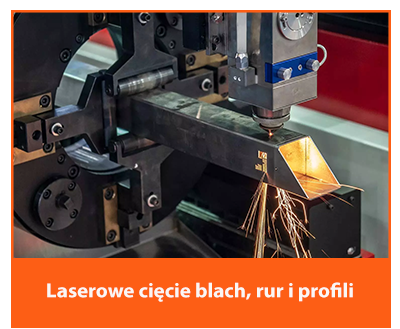
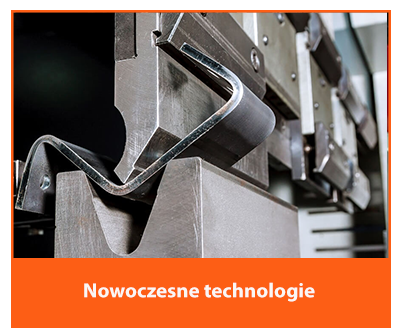
Production at the Rolmako factory is based on human labor, which is supported by modern automatic devices. The company employs the latest numerically controlled machines, including lasers for sheet metal processing, a center for profile and pipe processing, plasma and gas cutters, press brakes, universal shears and guillotines for cutting, hydraulic and mechanical presses, lathes, milling machines, shapers, hardening furnaces, pneumatic and rotary shot blasting machines, and robotic welding. The company is equipped with a warehouse with a large stock of metallurgical products, an automatic sheet storage system, and machine components. The technology used by the company, backed by expert human labor, allows achieving production results that will satisfy the most demanding customer.
Tillage machines are highly durable due to the use of specialized steels
The choice of tillage machinery by farmers largely depends on field characteristics and crop variety. The type and quality of steel used in pre-sowing aggregates, disc harrows, stubble cultivators, and other tillage machinery significantly impact machine reliability, maintenance costs, overall productivity, and operational longevity. Operating tillage machinery in hard soil imposes heavy loads on agricultural equipment. The high strength of the Swedish fine-grained steel used by Rolmako enhances efficiency by enabling higher working speeds without unscheduled service and repairs. This use of special steels extends the interval between inspections and allows for optimal utilization of the machinery's cultivation capabilities.
Why Choose Rolmako?
Superior machine quality at an optimal price ratio and beyond
Our expertise, experience, and commitment to continuous development have enabled us to achieve the most favorable quality-price ratio of agricultural machinery. This excellent ratio allows us to consistently and dynamically increase sales, making our products highly attractive in the agricultural market. Purchasing a Rolmako machine is an investment that pays off, ensuring maximum efficiency and low operating costs, thereby guaranteeing a quick return on investment. We trust in the quality of our machines, which will not only meet but exceed expectations in the most demanding conditions.
Machines friendly to both soil and farmer; cultivation should benefit, not harm, the soil
Who understands a machine better than the farmer who operates it daily?
Our agricultural machines are esteemed by farmers globally.
Here are some facts:
- oversized structures
- high-grade fine-grained construction steels
- reduced weed infestation thanks to ultra-shallow cultivation
- using fewer chemical agents
- water retention in the soil
- high-quality working elements
- easy-to-use agricultural tools
- low operating costs
- low energy demand
- good after-sales service
Sustainable agriculture
according to Rolmako
Our objective is to produce versatile agricultural machinery that delivers optimal results in sustainable farming systems. The comprehensive range of implements and a broad selection of working elements in a single machine enable us to achieve this. By performing multiple operations in one pass, our machines promote sustainable agriculture by minimizing fuel consumption, reducing greenhouse gas emissions, and limiting soil erosion, thereby contributing to more efficient use of natural resources.
Advantages of selecting Rolmako:
- comprehensive selection of available tillage tools
- working elements and other wear components exclusively from market leaders
- swedish quality fine-grained steel S500 and S700
- enhanced crop productivity through cutting-edge technologies
- optimal time efficiency
- increased profitability from soil cultivation
- competitive spare parts pricing
- low acquisition costs relative to the benefits achieved